


Our Blog

Latest Posts

Unlocking Productivity: Your Guide to the Haffner Machine Utilization App for Predictive Maintenance

Haffner’s HMU: Haffner Machine Utilization app was created to give manufacturers visibility into machine performance for all of Haffner’s advanced fenestration machinery.

Inside Fenestration: October Highlights from Haffner Machinery

October was a month of big moves and bold innovations at Haffner Machinery. From welcoming a seasoned industry leader to gearing up for the year’s biggest event—GlassBuild America—we’ve been busy shaping the future of fenestration automation. New Hire Announcement: Phil Shrider We’re excited to welcome Phil Shrider as Haffner Machinery’s new Director of Application Engineering! […]

Advanced Material Processing in Fenestration Manufacturing: Innovation for the Future

For decades, fiberglass dominated the fenestration industry as the go-to material for screens. While it remains widely used, manufacturers are now embracing a broader spectrum of materials to meet diverse architectural and functional requirements.

Haffner Machinery Appoints Phil Shrider as Director of Application Engineering

Haffner Machinery is proud to announce the appointment of Phil Shrider as its new Director of Application Engineering. Shrider brings a decade of expertise in the Window and Door industry, with a proven track record in engineering leadership, operations, and large-scale project management. Throughout his career, Shrider has held key roles as Safety, Quality, Engineering, […]

Predictive Maintenance: Driving Reliability and Growth in Smart Manufacturing

Imagine a world where your machines tell you when they need attention—before anything goes wrong.  That’s what predictive maintenance promises. This forward-looking approach uses data analysis, sensors, and machine learning to anticipate equipment failures before they occur. Unlike traditional reactive maintenance, predictive maintenance continuously monitors machinery conditions. By analyzing operational data, this method can identify […]

Inside Fenestration: September Highlights from Haffner Machinery

As labor shortages and rising demand reshape the fenestration industry, Haffner Machinery continues to lead with automation, precision, and adaptability. This month’s highlights include the SAC-850/855 and MAC-340 systems boosting production, a preview of our GlassBuild America 2025 lineup at Booth #21097, and insights from engineer Luis on how Haffner machines are built to adapt, […]

From Factory Floor to Trade Show Spotlight: Haffner Machinery at GlassBuild America 2025

As the glass and fenestration industry prepares for GlassBuild America 2025, one name is generating serious momentum: Haffner Machinery. Known for pushing the boundaries of window and door fabrication, Haffner is bringing a lineup of high-performance systems that promise to reshape how manufacturers think about speed, precision, and automation. No matter if you’re working with […]

Inside Fenestration: August Highlights from Haffner Machinery

Focusing on collaboration with industry partners and smart manufacturing, this month was all about working smarter, not harder. We explored how automated machinery and proactive strategies are reshaping the production floor, helping manufacturers stay ahead of the curve and meet today’s industry demands. Eliminate Inefficiencies Before They Crawl in with Haffner Machinery and Phifer Incorporated […]

DMC-054 FAQ: Double the Load, Double the Precision

If you’re in the PVC window and door manufacturing industry, your brand and profitability are built on precision, speed, and efficiency. That’s where the DMC-054 PVC Profile Machining Center for Frames from Haffner Machinery comes in. This cutting-edge system is designed to perform all cutting, milling, drilling, and operations on two profiles simultaneously, with just […]

Inside Fenestration: July Highlights from Haffner Machinery

This month, we explored how smart machinery and proactive strategies are reshaping the production floor, from precision cutting to preventive maintenance. If you’re looking to streamline your screen assembly line or future-proof your operations, Haffner’s latest innovations deliver speed, consistency, and control just for that. Solving the Production Puzzle with AUTOSCREEN™ Every production floor presents […]

You searched for: ""

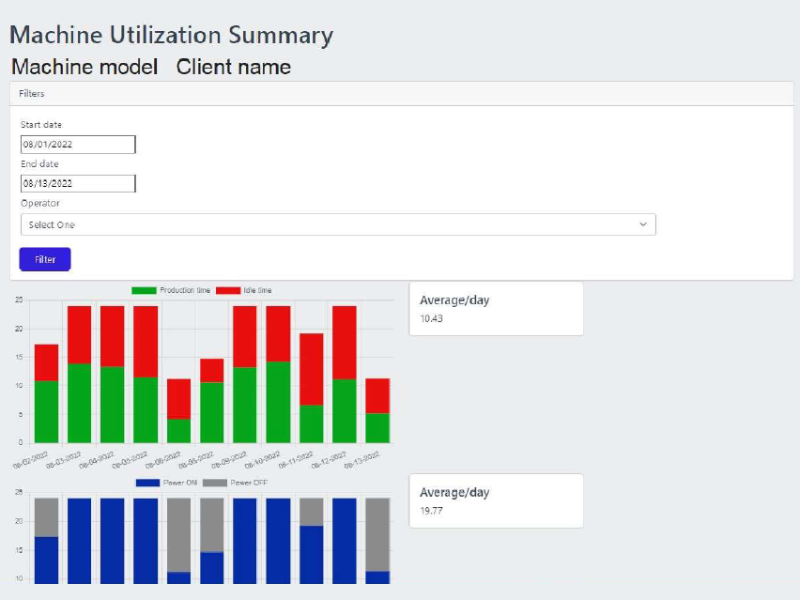
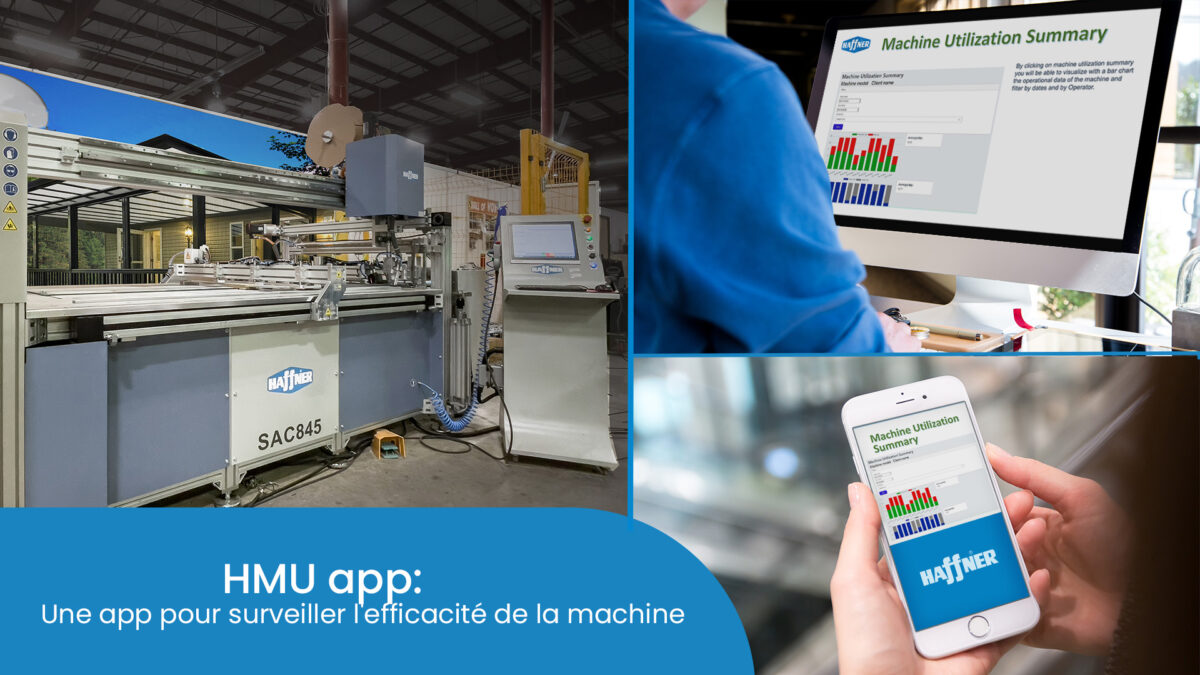
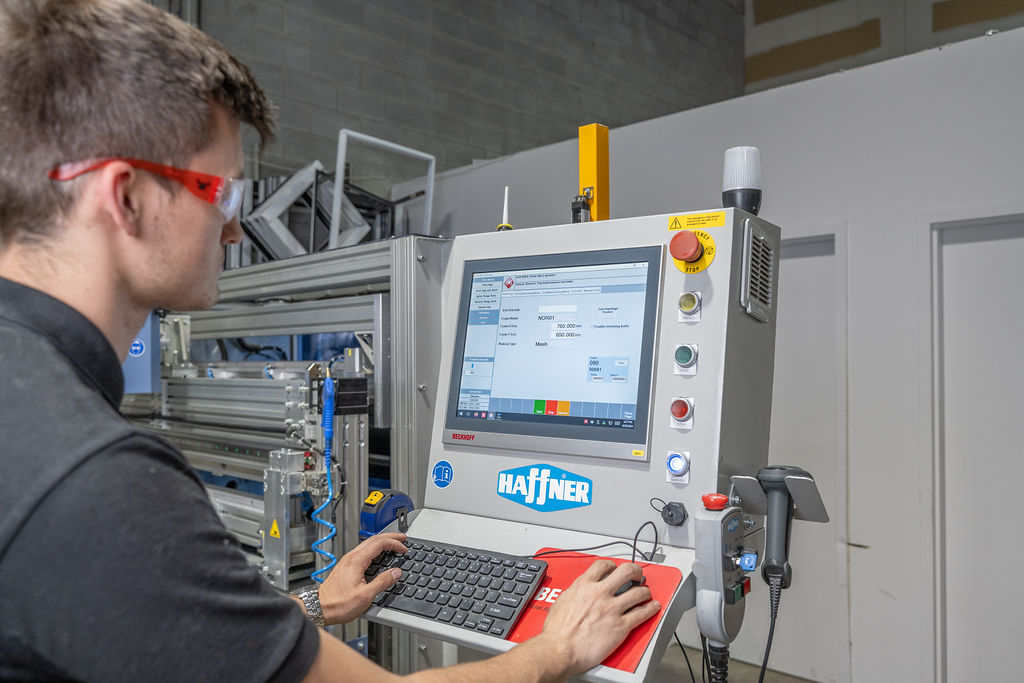
In modern manufacturing, efficiency is needed for higher yields and throughput. Haffner’s HMU: Haffner Machine Utilization app was created to give manufacturers visibility into machine performance for all of Haffner’s advanced fenestration machinery. Haffner also offers a separate VDoD: Video on Demand Camera Monitoring system that operates independently from the HMU app, ensuring that monitoring and utilization tracking are both analyzed for optimal functionality.

Example of the HMU Interface.

From real-time monitoring to historical data analysis, HMU helps supervisors and operators make informed decisions that drive productivity. We recently sat down with Laura A., a systems integration specialist and software engineer at Haffner Machinery, to discuss how this tool is reshaping operations for Haffner customers.

Q&A with Laura A.

What is the HMU app, and why was it developed?

The HMU app is a web-based platform designed to track and analyze machine utilization. Before HMU, clients could only view live camera feeds to confirm if machines were running, but they lacked historical data to understand trends or diagnose issues. HMU fills that gap by recording when machines are working and any issues with their processes.

This visibility helps identify bottlenecks, reduce downtime, and ensure machines deliver the ROI promised at purchase.

How does HMU help improve a manufacturer’s productivity?

By making machine usage transparent, HMU empowers supervisors to spot inefficiencies quickly. For example, if a machine is idle during peak production hours, the app highlights this gap, prompting corrective action.

One client significantly increased machine utilization after adopting HMU because they could pinpoint underuse and adjust workflows. Over time, this translates into higher output, reduced labor costs, and better alignment with production goals.

How does HMU differ from traditional monitoring tools?

Generic monitoring systems often require multiple integrations. However, HMU is integrated into all Haffner machines. This means fewer technical hurdles and faster data updates.

Users can log in from any internet-enabled device, including smartphones, PCs, and tablets, making machine status checks available anywhere you have internet connection.

Traditional tools also often provide fragmented data. HMU consolidates everything in one easy-to-use interface to reduce complexity and improve decision-making speed.


Want to learn how predictive monitoring with HMU can help boost productivity for your production line? Read our blog, “Predictive Maintenance: Driving Reliability and Growth in Smart Manufacturing.”


 What kind of data does HMU track?

Currently, HMU captures four key metrics:

  • Working time – How long the machine actively produces.
  • Power on/off – When the machine starts and stops.
  • Idle time – Periods of inactivity that can signal inefficiencies.

Future updates will add data on machine alerts, operator tracking, and downloadable reports. These enhancements will allow supervisors to analyze downtime causes and compare planned vs. actual productivity.

Is HMU available for all Haffner machinery?

Yes, HMU can be installed on all Haffner machines. However, Video on Demand Camera Monitoring is typically reserved for larger machines like processing centers and double-track systems, where productivity impact is highest. Smaller machines may not include cameras, but they still benefit from HMU’s data tracking capabilities.

The Haffner team is currently working on integrating live camera feeds with HMU. Soon, users will be able to stream live camera feeds within the HMU portal, combining visual confirmation with performance data for a complete picture of machine health and activity.

How often is HMU updated?

The development team plans around five updates per year. These updates focus on improving speed, adding new utilities like downloadable reports, and enhancing user experience. Clients often contribute ideas, making HMU a tool that evolves with real-world needs.

What is the subscription process?

HMU offers a free trial period, so clients can explore its features before committing. After the trial, an annual subscription provides access for up to five supervisors, who can create operator accounts under their profiles. This structure ensures scalability for teams without overwhelming costs.


Haffner’s HMU app is a strategic asset for manufacturers aiming to optimize efficiency to keep up with the evolving needs of the fenestration industry. By providing real-time and historical data, HMU helps teams make smarter decisions, reduce downtime, and achieve production goals faster.

Ready to transform your operations? Contact us to explore how HMU can unlock your shop’s full potential.

View

October was a month of big moves and bold innovations at Haffner Machinery. From welcoming a seasoned industry leader to gearing up for the year’s biggest event—GlassBuild America—we’ve been busy shaping the future of fenestration automation.

New Hire Announcement: Phil Shrider

We’re excited to welcome Phil Shrider as Haffner Machinery’s new Director of Application Engineering! Phil brings a diverse range of experience in window and door manufacturing, having successfully managed existing facilities and built two greenfield factories from the ground up. His background spans:

  • Project Management & Layouts – Helping customers design efficient workflows and optimize plant layouts.
  • Process Mapping & Business Case Development – Building strong ROI strategies for automation investments.
  • Preventative Maintenance & Root Cause Analysis – Ensuring long-term reliability and minimizing downtime.

Phil understands the challenges manufacturers face today, from labor shortages to tight payback expectations. As Phil says:
“Most manufacturers expect a two-year payback period for equipment. I’m looking forward to introducing transformative automation lines and helping customers anticipate and head off hiccups to achieve a faster payback.”

Ramp up to GlassBuild America 2025

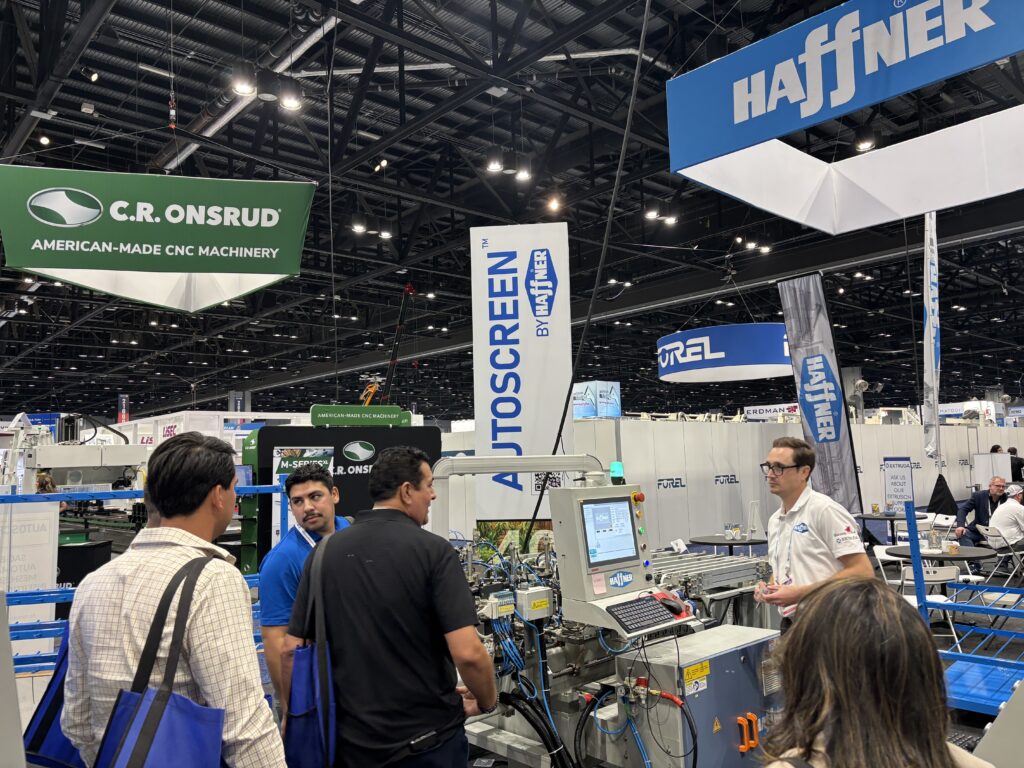
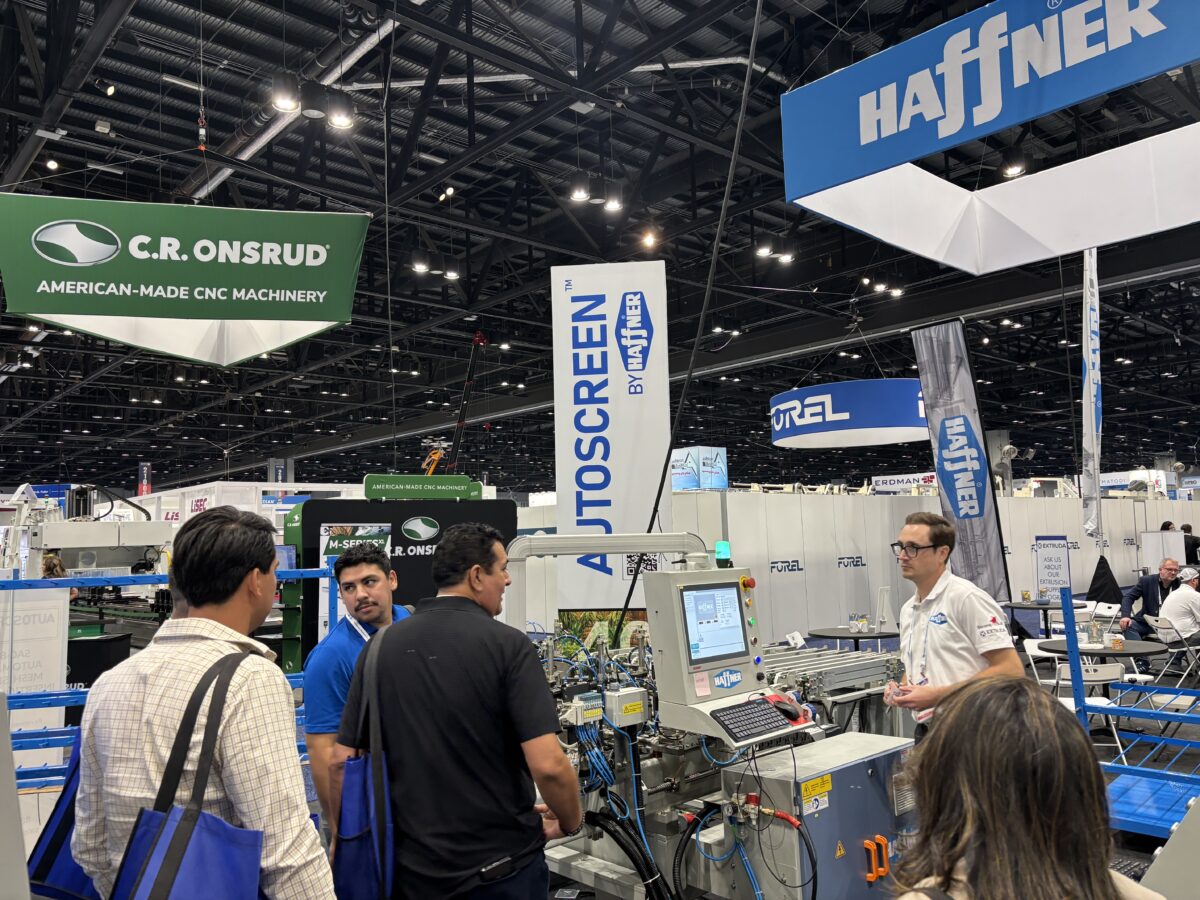
GlassBuild America was held at the beginning of November.  Haffner Machinery showcases the next generation of automation solutions.

What’s Happened at Our Booth?

  • Live Demos of Eight Advanced Systems – Attendees saw our advanced machinery in action, from screen assembly to profile processing.
  • Meet Our Experts – Stephen Kucer, President of Haffner Machinery, and our team of experts showcased how custom solutions can transform your operations.
  • Explore Solutions for Labor Challenges – We explored how automation can boost throughput, reduce errors, and improve efficiency.

Featured Systems at Our Booth:

  • DMC-055 PVC Profile Machining Center – Double-load capability for simultaneous processing of two individual profiles at the same time, maximizing throughput.
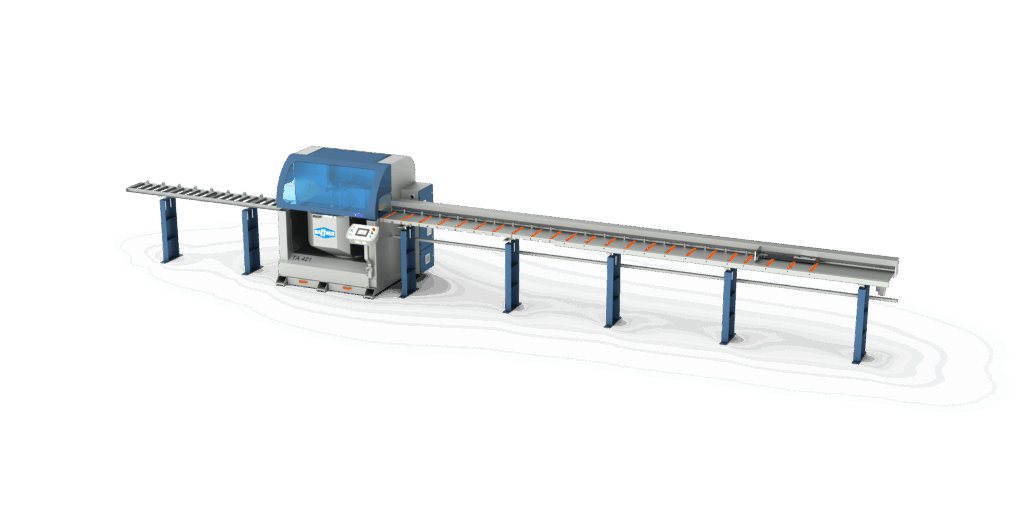
  • TA-421 Automatic Single Mitre Saw – High-accuracy programmable cuts for aluminum profiles.
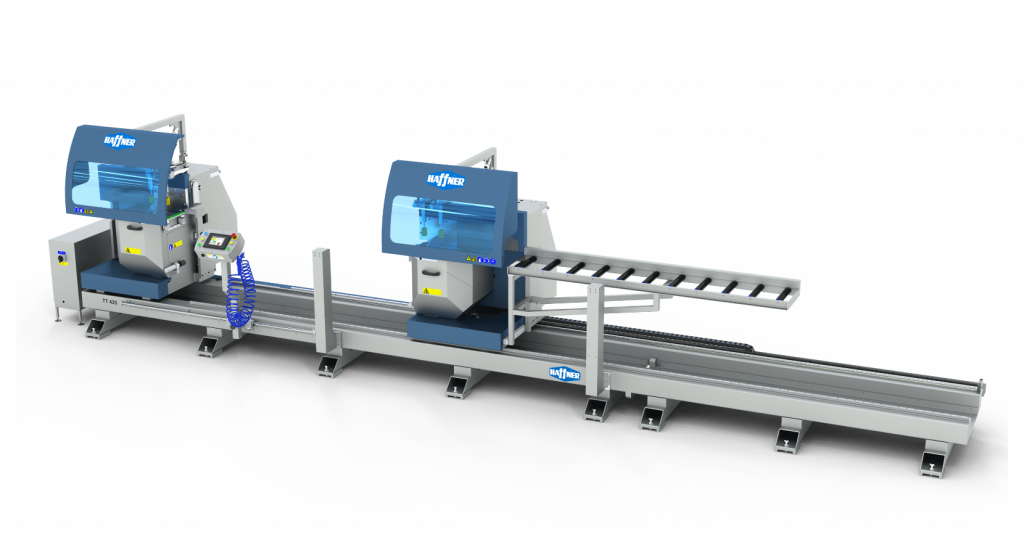
  • TT-425 Double Mitre Saw – Versatile undercut technology for clean angles in aluminum and PVC.
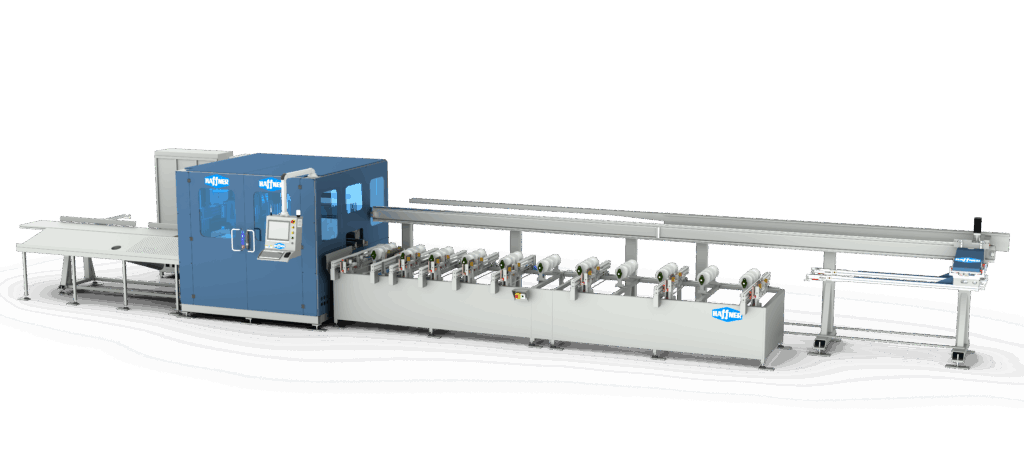
  • MAC-340 & MAC-440 Aluminum Profile Processing Centers – Multi-step CNC machining with automatic tool changes for complex profiles.
  • AUTOSCREEN™ Trio – Fully automated screen assembly from cutting profile to frame assembly to screen insertion, now with patio door capability.

This year, we showed how we reshaped the window and door assembly with speed, precision, and automation.

Meet Tony C.

 When you think of cutting-edge screen assembly, think of Tony C., Haffner’s Product Development Specialist. For five years, Tony has been the driving force behind automation innovation, blending mechanical expertise, software integration, and creative design to deliver solutions that redefine efficiency.

From troubleshooting machines remotely to installing advanced systems in Wisconsin and Australia, Tony’s work ensures customers worldwide experience seamless automation. His day-to-day includes:

  • 3D Printing New Parts – Rapid prototyping for faster innovation.
  • Testing Frames & Components – Guaranteeing precision and durability.
  • Ensuring Flawless Installations – Smooth transitions from manual to automated processes.

Tony helped create the AUTOSCREEN™ product line, a fully automated solution for screen assembly that delivers speed, accuracy, and reliability. Here’s how it works:

  1. TA-144/30 – Automatic Aluminum Wedge Cutting Saw
  2. SAC-100 – Automated Screen Frame Assembly Machine
  3. SAC-850/855 – Automated Mesh/Spline Insertion & Trim Machines

This trio adapts to your needs while reducing labor costs and boosting throughput. Tony and the team stay with you every step of the way—from installation to training—ensuring success.

Ready to Take the Next Step?

Transform your production floor with automation that delivers speed, precision, and ROI. Contact us today to discuss your goals and discover how Haffner Machinery can help you scale.

View

Fenestration manufacturing has entered a new era of innovation. One of the most significant advancements is the ability to process a wider range of materials with precision and efficiency. This capability is reshaping production strategies, improving product performance, and enabling manufacturers to meet evolving customer demands.

Expanding Beyond Traditional Materials

For decades, fiberglass dominated the fenestration industry as the go-to material for screens. While it remains widely used, manufacturers are now embracing a broader spectrum of materials to meet diverse architectural and functional requirements:

  • Aluminum Mesh
    Aluminum is gaining popularity for its strength, corrosion resistance, and sleek appearance. It’s ideal for high-end residential and commercial projects where durability and aesthetics matter.
  • Vinyl/PVC Profiles
    PVC, otherwise known as Vinyl, continues to be a staple for window and door frames due to its cost-effectiveness, thermal efficiency, and ease of maintenance. Advanced machinery ensures consistent quality and precision when processing these profiles.
  • Clear Vinyl for Sunrooms
    This specialized material caters to niche markets like sunrooms, offering transparency and weather resistance. While less common than aluminum or fiberglass, its inclusion demonstrates the industry’s adaptability.
  • Stronger Mesh Screens — Fiberglass with Rubber Coating
    Emerging materials are getting stronger for the most extreme environments, such as fiberglass screens with a rubber coating for enhanced durability. They are designed to withstand heavy use and environmental stress, making it ideal for premium applications.

These developments allow fenestration manufacturers to offer products that meet both functional and aesthetic expectations, expanding their market reach.


Want to see how SAC-850, the third step of the AUTOSCREEN™ trio, processes even the toughest window screens on the market — like TuffScreen©?


Why Advanced Materials Matter in Fenestration

The shift toward advanced materials isn’t just about variety; it’s about performance and customer satisfaction. Here’s why it matters:

  • Durability and Longevity
    Aluminum and tough screens provide superior resistance to wear, corrosion, and environmental factors, reducing maintenance costs for end-users.
  • Design Flexibility
    Clear vinyl and specialty mesh enable builders to create unique spaces without compromising structural integrity.
  • Market Responsiveness
    Manufacturers that can process multiple materials quickly adapt to changing trends and customer preferences, gaining a competitive edge.

Bottom Line: Advanced material processing empowers fenestration companies to deliver high-quality, customizable solutions that meet modern demands.

Challenges in Processing Advanced Materials

Innovation brings complexity, and nowhere is this more evident than in fenestration manufacturing. Each material introduces unique variables that impact processing speed, machine calibration, and handling requirements. Understanding these nuances is critical for maintaining quality and efficiency.

Material-Specific Considerations:

  • Fiberglass: This material is the fastest to process, making it ideal for high-volume production runs. Its flexibility and lightweight properties allow machines to maintain speed without sacrificing accuracy.
  • Vinyl and Aluminum: These materials require slower processing speeds to prevent deformation or surface damage.

Operational Challenges:

  • Machine Optimization: Switching between materials means recalibrating feed rates, cutting angles, and tension settings.
  • Quality Assurance: Maintaining consistent output while adapting to different material properties requires advanced automation and monitoring systems.
  • Throughput vs. Precision: Manufacturers must strike a balance—speeding up production without compromising structural integrity or finish quality.

Haffner’s Profile Processing Centers are engineered to handle these challenges head-on. With advanced machining technology, automated calibration, and integrated barcode systems, these centers allow manufacturers to process aluminum, vinyl, and other materials with exceptional precision and repeatability.


Personalized Testing: A Key Differentiator

One of the most critical steps in adopting advanced materials is personalized testing. Leading manufacturers don’t rely on generic samples—they work directly with customer-supplied materials. This approach ensures:

  • Machine Calibration for Specific Profiles
    Every order is tested on the exact materials and profiles the customer uses, guaranteeing compatibility.
  • Reduced Downtime
    By validating performance before delivery, manufacturers minimize installation issues and production delays.
  • Confidence in Reliability
    Personalized testing ensures that machinery can handle real-world conditions, not just ideal lab scenarios.

This level of customization sets industry leaders apart, reinforcing trust and long-term partnerships with clients.

Haffner takes this commitment seriously. Each machine undergoes rigorous testing with customer-provided samples before shipment. This process includes adjusting machine settings for material type, verifying throughput, and confirming quality standards, so when the equipment arrives, it’s production-ready for your specific application.

Emerging Trends and Future Outlook

Several trends are shaping the future of fenestration manufacturing:

  • Expanded material processing
    Manufacturers are moving beyond traditional fiberglass and vinyl to incorporate aluminum, brass, stainless steel, and other advanced materials into standard operations. This expansion not only meets growing customer demand for durability and aesthetics but also opens doors to new architectural possibilities.
  • Integration of Automation
    Advanced material processing and automation go hand-in-hand. Automated systems reduce labor costs, minimize repetitive strain injuries, and ensure consistent quality across high-volume production. As more manufacturers adopt integrated cells, the efficiency gains are substantial.

Haffner’s automated solutions, such as the AUTOSCREEN product family, create streamlined workflows that can be operated by just three operators – one per machine!


While screens remain most common in North America and parts of Europe, global interest in advanced materials is growing. Manufacturers that invest in these capabilities today will be well-positioned for tomorrow’s opportunities.

The Bottom Line

Advanced material processing is transforming fenestration manufacturing. By embracing machinery capable of handling diverse materials, companies can improve efficiency and throughput, reduce labor costs, and deliver products that meet evolving customer expectations.

As innovation continues, those who invest in advanced processing and automation now will lead the industry into the future. Partner with Haffner to gain complete, customized automation solutions—not just a machine—designed to meet your everchanging production needs. Contact us today.

View

Haffner Machinery is proud to announce the appointment of Phil Shrider as its new Director of Application Engineering. Shrider brings a decade of expertise in the Window and Door industry, with a proven track record in engineering leadership, operations, and large-scale project management.

Throughout his career, Shrider has held key roles as Safety, Quality, Engineering, and Plant Manager for multiple leading window companies. His experience spans managing existing facilities and successfully building two “green field” factories from the ground up.

“Phil’s deep industry knowledge and hands-on experience make him an incredible asset to our team,” said President of Haffner Machinery North America, Stephen Kucer. “He has walked in our customers’ shoes, and his practical engineering expertise will help our customers achieve greater efficiency. We’re thrilled to have him on the Haffner team!”

Shrider’s expertise includes:

  • Project management and facility layouts
  • Process mapping and production planning
  • Capital business case planning and development
  • Preventive maintenance strategies and root cause analysis

View

Imagine a world where your machines tell you when they need attention—before anything goes wrong.  That’s what predictive maintenance promises.

This forward-looking approach uses data analysis, sensors, and machine learning to anticipate equipment failures before they occur. Unlike traditional reactive maintenance, predictive maintenance continuously monitors machinery conditions. By analyzing operational data, this method can identify early warning signs of wear or malfunction, allowing maintenance teams to intervene at the optimal time.

At Haffner Machinery, predictive maintenance is a proactive strategy that keeps production lines running smoothly with our remote monitoring tools. Our service team manages troubleshooting, coordinates specialists, and ensures every customer receives tailored assistance for their specific machine.

The Competitive Edge: Why Predictive Maintenance Matters

The benefits of predictive maintenance are significant for manufacturers and industrial operators. By addressing issues before they lead to costly downtime, companies can:

  • Reduced Downtime: Predictive analytics can reduce unplanned downtime by up to 30% in manufacturing environments.
  • Lower Costs: Companies report up to 25% savings on maintenance costs by switching from reactive to predictive strategies.
  • Extended Equipment Life: Regular monitoring and timely interventions can increase equipment lifespan by 20–40%.
  • Optimized Inventory: Knowing which parts are likely to fail allows for smarter stocking and purchasing.

Market trends show that predictive maintenance is rapidly gaining traction, especially as smart manufacturing becomes more widespread:

  • The predictive maintenance market is projected to reach $14.09 billion USD in 2025, with a compound annual growth rate (CAGR) of 35.2% through 2030.
  • IoT-enabled smart sensors and AI/ML-driven analytics are transforming how manufacturers monitor equipment health.
  • In 2024, cloud platforms represented 67.2% of the predictive maintenance market, and are growing at nearly 38% CAGR.
  • North America and Asia-Pacific have the biggest markets, with Asia-Pacific projected to grow at a 36.1% CAGR through 2030.

Turning Manufacturing Challenges into Opportunities

Many manufacturers still rely on reactive maintenance—waiting until a machine fails before taking action. This approach often leads to unexpected downtime, costly emergency repairs, and lost productivity.

The solution? Pairing predictive maintenance with regular care.

Predictive maintenance leverages real-time data and analytics to anticipate issues before they become critical, while routine checks and cleaning ensure that machines remain in optimal condition.

Over time, customers recognize the value of preventive care, especially as machines become integral to their operations. They see fewer emergencies, more predictable production schedules, and improved overall efficiency.

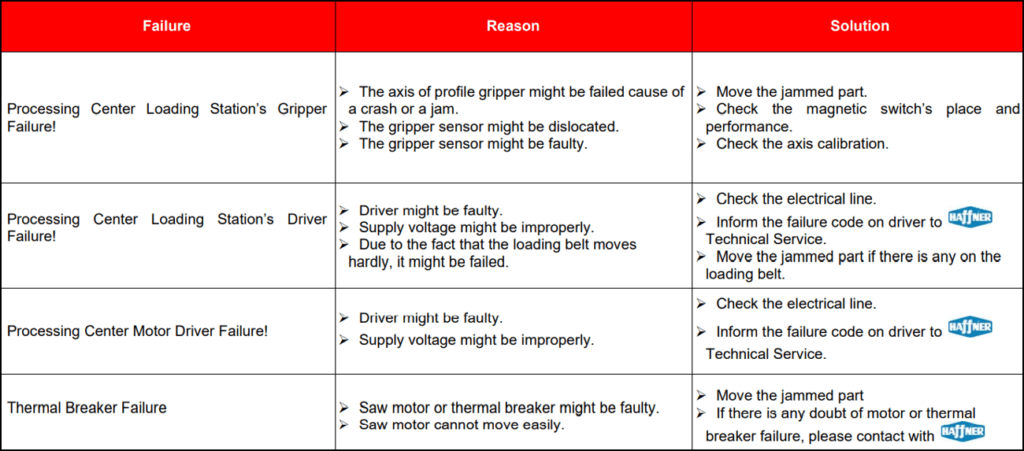
To support this transition, service teams like Haffner’s provide ongoing advice, resources, and training. They help customers adopt better maintenance habits, offer tailored maintenance schedules, and provide remote monitoring tools to catch potential problems early.

Sample maintenance training material provided by Haffner Machinery during technician onboarding.

This partnership not only minimizes unplanned outages but also empowers manufacturers to take control of their production environment, driving long-term reliability and growth.

Remote Monitoring with Haffner Machinery

Digital monitoring has become a cornerstone of predictive maintenance, enabling companies to oversee equipment performance, detect issues early, and optimize operations from virtually anywhere.

Manufacturers can track machine uptime, identify trends, and respond to problems before they escalate. This approach not only reduces the need for on-site troubleshooting but also empowers teams to make data-driven decisions that improve efficiency and reliability.

At Haffner, these advantages are brought to life through our advanced remote monitoring system. Operators and service managers can access live video-on-demand camera feeds, review recorded footage, and use the Haffner Machine Utilization (HMU) app to analyze operator performance and machine efficiency.

By adopting remote monitoring tools, manufacturers gain higher uptime, faster troubleshooting, and a more resilient production environment, which are all key advantages in today’s competitive landscape.


Take your window assembly line wherever you go with Haffner’s remote monitoring system!


As manufacturing continues to evolve, predictive maintenance is becoming a necessity for operational excellence and future-ready production. With the combination of advanced technologies, smart manufacturing, and a proactive service culture, companies like Haffner Machinery are not only minimizing downtime but also empowering customers to achieve new levels of reliability and growth.

Embracing these smart strategies ensures that manufacturers stay competitive, agile, and prepared for whatever challenges the future may bring.


Ready to future-proof your production line?

Connect with Haffner Machinery to explore how predictive maintenance and remote monitoring can transform your operations.

View

As labor shortages and rising demand reshape the fenestration industry, Haffner Machinery continues to lead with automation, precision, and adaptability. This month’s highlights include the SAC-850/855 and MAC-340 systems boosting production, a preview of our GlassBuild America 2025 lineup at Booth #21097, and insights from engineer Luis on how Haffner machines are built to adapt, perform, and evolve.

Automation Is the Answer: Tackling the Workforce Crisis in Fenestration

The manufacturing industry is at a pivotal moment. With over 1.9 million jobs projected to go unfilled by 2033, the skilled labor shortage is now a present-day challenge. At Haffner Machinery, we see this reality play out daily in fenestration facilities globally: experienced workers are retiring, younger generations are hesitant to enter the trades, and manufacturers are struggling to meet demand while maintaining productivity.

In our latest article, Bridging the Gap: How Automation Is Solving the Manufacturing Workforce Crisis, we explore how automation is reshaping the industry by:

  • Reducing dependency on manual labor
  • Enhancing product quality and consistency
  • Enabling scalable growth despite workforce constraints

From aging workforces to a lack of structured training programs, the challenges are real—but so are the solutions. Haffner’s technology, including the three-part AUTOSCREEN™ production cell, is designed to meet these challenges head-on.

GlassBuild America 2025 Preview: See What’s Powering the Buzz

From the factory floor to the tradeshow buzz, the verdict is unanimous: Haffner Machinery is redefining window assembly.

As the industry gears up for GlassBuild America 2025, manufacturers across North America are already talking about speed, precision, and labor-saving design. At Booth #21097, you’ll get a firsthand look at the machines making headlines.

Want a sneak peek of what’s to come? View the product lineup today.

“Behind every machine, there’s a story.”: An Interview with Haffner Machinery Engineer Luis

We recently sat down with Luis, one of our engineers, to explore what really happens behind the scenes when these powerful machines come to life. His insights reveal not just technical expertise, but a deep commitment to solving real-world manufacturing challenges.

Luis offered a glimpse into the adaptability behind Haffner’s machines, from customizing builds for hurricane-prone regions to streamlining internal mechanics pre- and post-installation.

The engineering team is constantly pushing boundaries and redefining what’s possible in fenestration manufacturing. They are slashing installation timelines from six months to just two, increasing daily frame output from 200 to 350, and more.

“Very rarely do we deliver a machine ‘off the shelf’,” Luis said. “Each one is adapted to the customer’s profiles, angles, and designs. No two factories (or their doors and windows) are ever the same.”

It’s this mindset—precision, resilience, and pride in problem-solving—that makes Haffner machines more than just tools. They’re tailored solutions built by people who care.

Want to see how our engineering team can tailor a system for your factory? Let’s talk.

Product Features

SAC-850/855

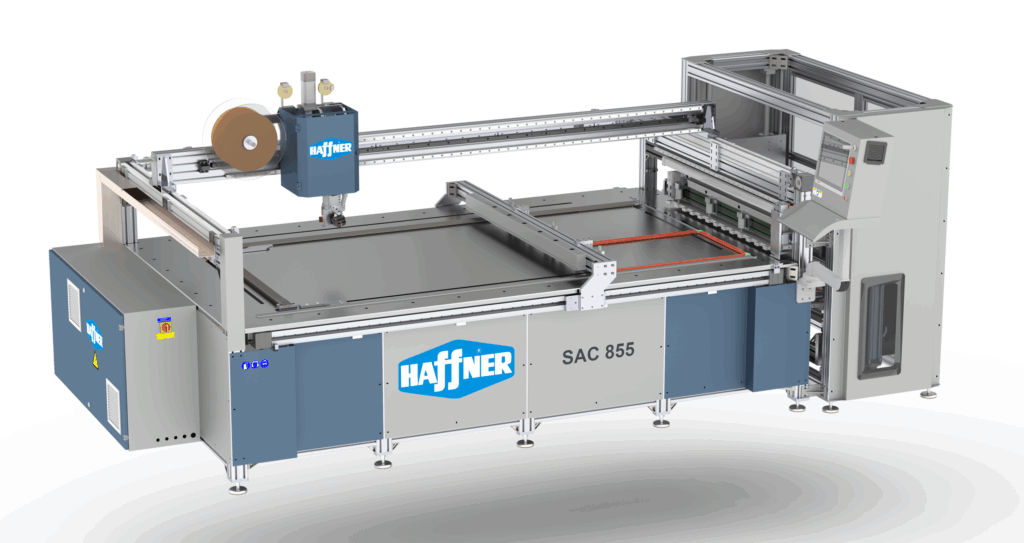
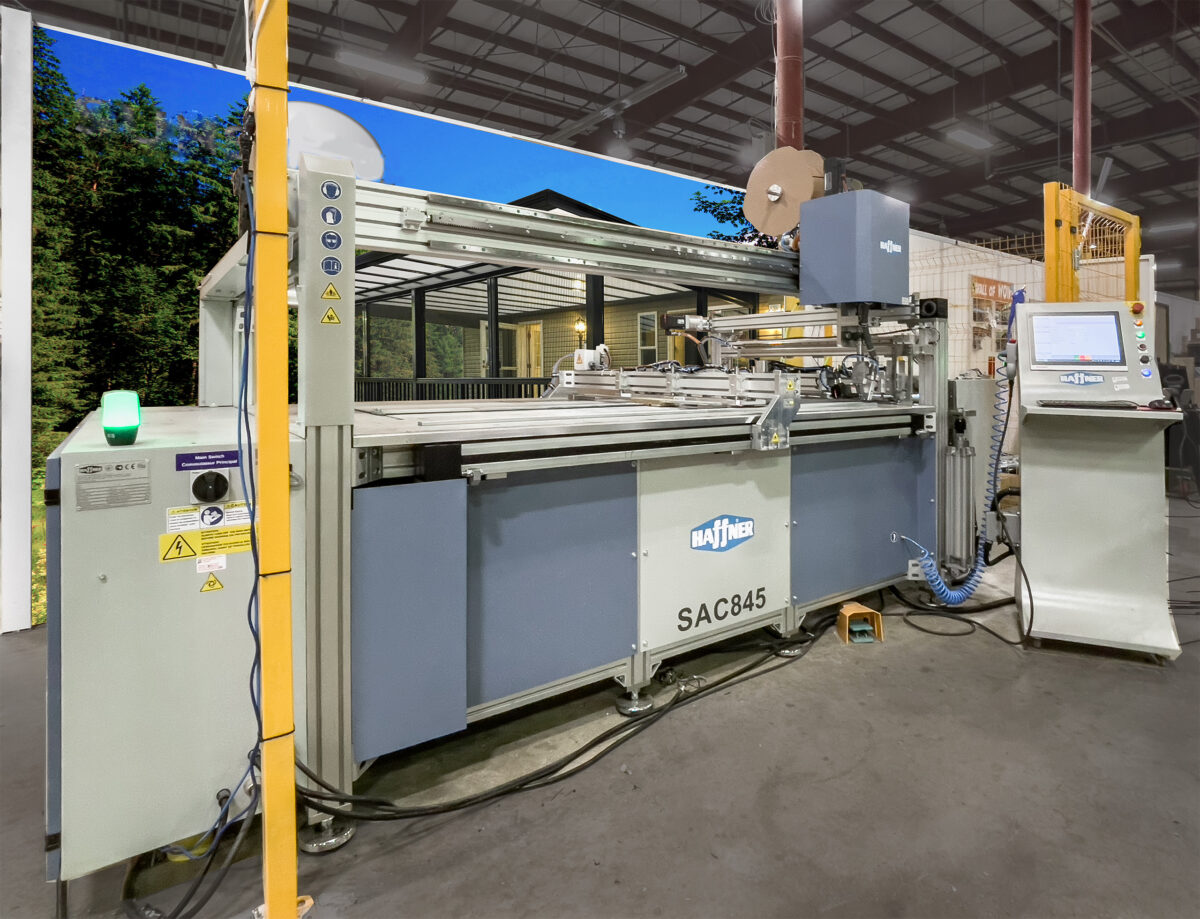
Our SAC-850 and SAC-855 systems are redefining screen assembly with automation that’s fast, accurate, and built for scale. As part of the fully integrated AUTOSCREEN™ product cell, these machines eliminate manual bottlenecks by automating the mesh and spline insertion process for pre-assembled frames.

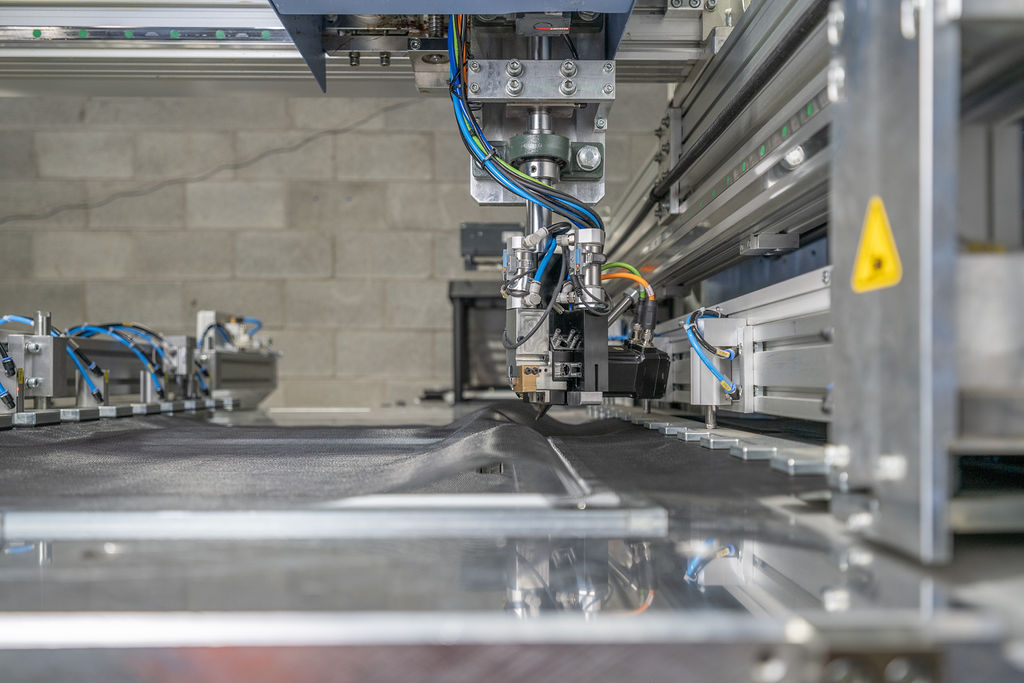
Using barcode or QR code scanning or direct ERP inputs, the SAC-850/855 automatically selects the correct mesh, applies it with precision, inserts the spline, and trims excess material in one seamless cycle.

The newly enhanced SAC-855 model takes performance even further, supporting larger formats like patio doors with impressive speed:

  • Hung Window (24″ x 36″) — 40 seconds
  • Casement Window (48″ x 60″) — 50 seconds
  • Patio Door (48″ x 96″) — 80 seconds

The SAC-850/855 delivers the throughput and reliability manufacturers need to stay ahead.

MAC-340

Introducing the MAC-340 Aluminum Profile Processing Center, our multitasking marvel that’s quietly transforming production floors globally. Engineered for precision and built for speed, the MAC-340 consolidates milling, drilling, tapping, and marking into one seamless operation, eliminating inefficiencies and unlocking new levels of throughput.

Why It’s the Secret to Success:

  • Precision that Performs: ±0.1 mm accuracy on aluminum profiles ensures flawless execution every time.
  • Speed that Scales: Processes profiles up to 4000mm across 3 axes with CNC-level control.
  • Smart Multitasking: A 7-tool magazine paired with a double-sided angle processing head and automatic tool change system handles complex jobs with ease.
  • Workflow Wizardry: Optional double-station operation boosts capacity by up to 30%, making it ideal for high-volume shops.

The MAC-340 delivers consistent quality and streamlined operations—giving manufacturers a competitive edge in today’s fast-paced market.

Ready to future-proof your factory?
Explore how Haffner Machinery is driving innovation in fenestration, from automation that solves labor shortages to machines engineered for precision and adaptability. Visit us at GlassBuild America 2025, Booth #21097, or contact us today to discover the right system for your shop.

View

As the glass and fenestration industry prepares for GlassBuild America 2025, one name is generating serious momentum: Haffner Machinery. Known for pushing the boundaries of window and door fabrication, Haffner is bringing a lineup of high-performance systems that promise to reshape how manufacturers think about speed, precision, and automation.

No matter if you’re working with aluminum or PVC parts, Haffner’s solutions are engineered to streamline production and elevate output, making them a must-see at this year’s show.

What’s on Display at Booth #21097?

DMC-055: PVC Profile Machining Center for Sashes – Double Simultaneous Processing

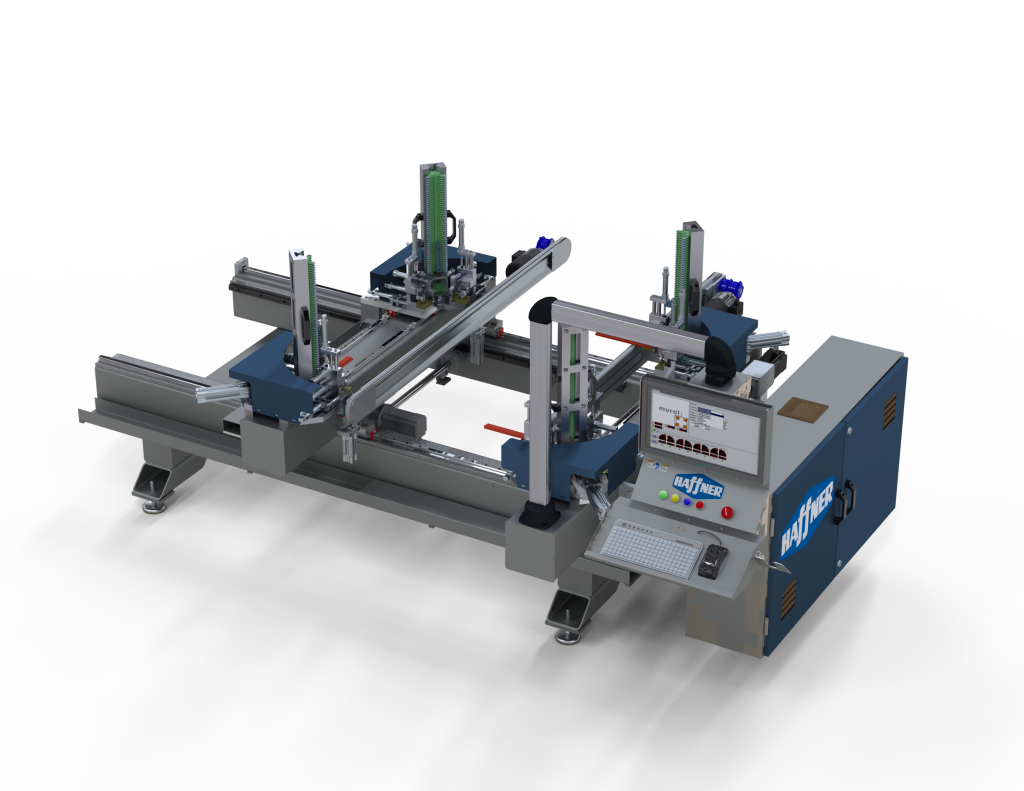
This advanced machining center is engineered for high-speed, high-precision fabrication of PVC window sashes. It offers simultaneous cutting, milling, drilling, and marking on TWO PVC profiles at once, significantly boosting productivity. At the heart of the system is Haffner’s proprietary Intelligent Parallel Fabrication technology, which ensures synchronized operations with minimal downtime. This makes the DMC-055 an ideal solution for manufacturers aiming to double their throughput without compromising on accuracy.


Our dual processing centers don’t stop at sashes! The DMC-054 is made to process TWO PVC profiles simultaneously for window frames.


TA-421: Automatic Single Mitre Saw

Designed for precision and programmability, the TA-421 is a vital tool for aluminum profile cutting. It features a 650 mm diameter saw blade and advanced servo-controlled motion, allowing for programmable cuts tailored to specific profile dimensions. This saw is perfect for operations that demand repeatable, high-accuracy mitre cuts in aluminum fabrication environments.

TT-425: Double Mitre Saw

The TT-425 is a dual-blade system built for versatility and precision. It comes equipped with two 450 mm blades featuring undercut technology, enabling it to handle profiles up to 6000 mm in length. The undercut capability ensures clean, accurate angles, which are critical for tight-fitting assemblies in both aluminum and PVC applications.

MAC-340: Aluminum Profile Processing Center

The MAC-340 offers a robust solution for multi-step aluminum profile machining. It supports milling, drilling, tapping, and marking, all managed through a 3-axis CNC control system. With automatic tool changes and streamlined operations, this machine reduces manual intervention and enhances consistency across production runs.

MAC-440: Aluminum Profile Processing Center

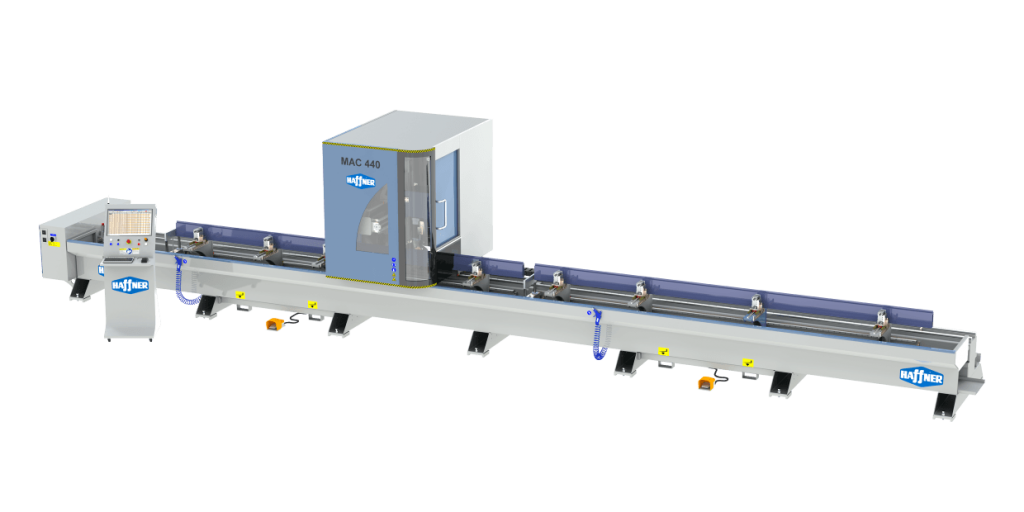
The MAC-440 adds speed and flexibility to aluminum profile processing. It features a water-cooled spindle for sustained high-speed operation and 4-axis movement to accommodate complex machining tasks. Enhanced with advanced clamp positioning and integrated safety features, it ensures both precision and operator assurance.

Don’t miss seeing the AUTOSCREEN trio in person!

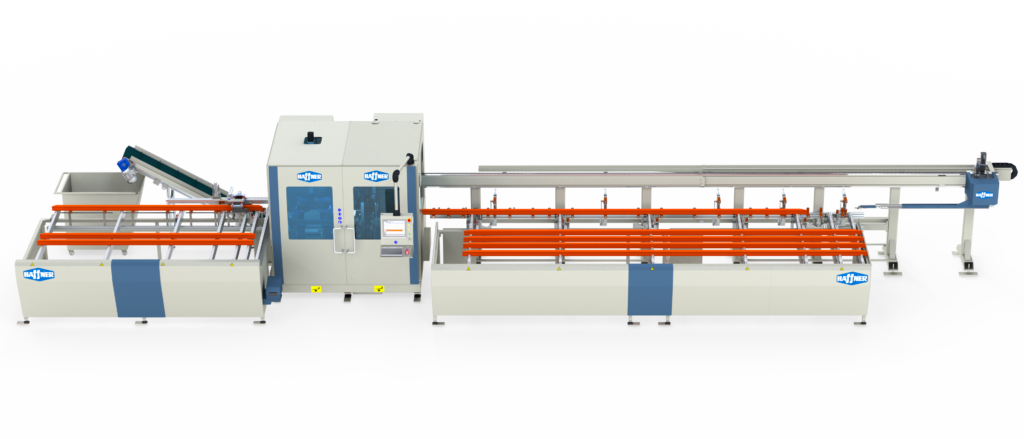
TA-144/50: Automatic Aluminum Wedge Cutting Saw

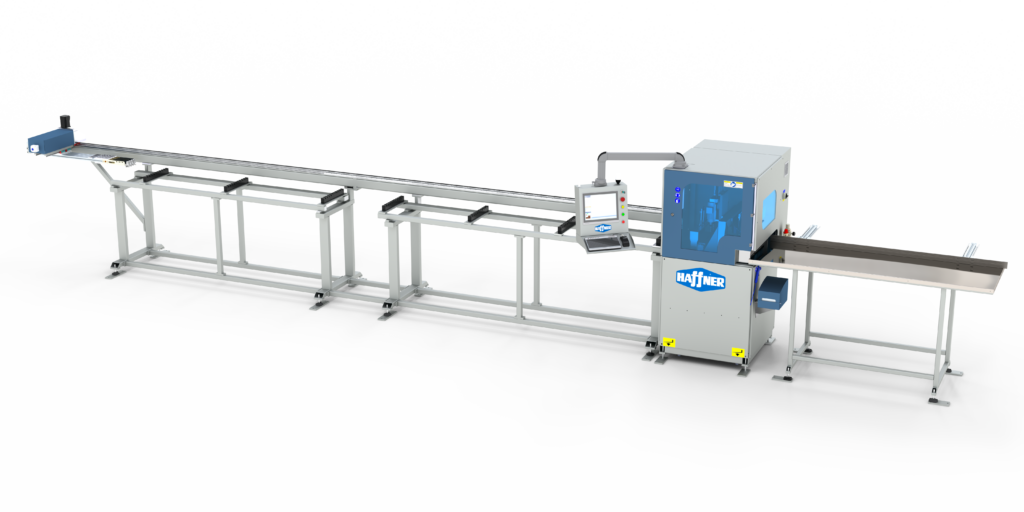
The TA-144/50 simplifies precision wedge cuts in aluminum components. It delivers cuts with ±0.1 mm accuracy and features servo-controlled feed and slicing systems for consistent results. This saw is particularly well-suited for producing wedge cuts in aluminum screen and frame components.

SAC-100: Automated Screen Frame Assembly

The SAC-100 brings speed and simplicity to screen frame production. It assembles screen frames with corner keys in just 25 seconds and uses barcode scanning for fast setup. A conveyorized output system ensures a smooth transition to downstream processes, making it a highly efficient solution.

SAC-850/55: Automated Mesh/Spline Insertion & Trim

Designed as a one-operator solution for screen finishing, the SAC-850/55 completes mesh and spline insertion in under one minute. It accepts input via barcode or ERP system, offering flexible integration into existing workflows. This machine is optimized to reduce manual labor while maintaining high throughput.

Meet the Production Development Team

At the heart of Haffner’s innovation are the dedicated specialists who turn concepts into cutting-edge machinery. At Glassbuild 2025, you will have a chance to meet two of the people behind our machinery: Tony C. and Marc G.

Tony – Product Development Specialist

Tony is the go-to expert for the SAC series screening machines, having played a key role in their design, troubleshooting, and integration into customer operations. With five years at Haffner, Tony’s journey began as a technician, and now, his focus is on design and continuous improvement, especially for the SAC series, where he enjoys the creative freedom to devise innovative solutions. He thrives on the challenge of making improvements, whether it’s adapting the machine for new materials like fiberglass, PVC, or aluminum, or pushing for greater speed and output with automation.

Marc – Product Development Specialist

Marc is our product development specialist, focused on processing centers such as the SC220, AL230, and DMC series. He started as a technician, handling maintenance, installation, and service. Marc’s expertise lies in customizing machines to meet unique customer needs: designing new parts, modifying software, and bridging the gap between manufacturer capabilities and customer needs. He is excited about the future of automation, particularly integrating robotics to link Haffner’s machines into seamless production lines.

Together, Tony and Marc embody Haffner’s commitment to technical excellence, customer-focused solutions, and a culture of continuous improvement. Their passion for problem-solving and innovation ensures that every machine delivered is not just a product, but a tailored solution ready to meet the evolving needs of the fenestration industry.

Want to learn more about the team? Meet Tony, Marc, and our team of experts at GlassBuild America 2025 at Booth #21097 or schedule a meeting with us.

View

Focusing on collaboration with industry partners and smart manufacturing, this month was all about working smarter, not harder. We explored how automated machinery and proactive strategies are reshaping the production floor, helping manufacturers stay ahead of the curve and meet today’s industry demands.

Eliminate Inefficiencies Before They Crawl in with Haffner Machinery and Phifer Incorporated

Haffner and Phifer have teamed up to deliver a smarter, faster, and more ergonomic solution to screen manufacturing: Phifer’s mesh paired with Haffner’s SAC-850 Automated Bug Screen Mesh and Spline Insertion Machine, the final step in the AUTOSCREEN™ process.

The results? Flawless. Screens were produced in seconds—even with the toughest mesh on the market.

Why It Matters:
As seasoned workers retire and younger generations shift away from rural manufacturing hubs, companies need solutions that maintain throughput and quality without compromise. From energy savings to reduced rework and training needs, automation is the key to future-proofing your operations.

Learn more about it by reading the case study in collaboration with Phifer: Phifer Screen Mesh and AUTOSCREEN™: Working Together to Boost Fenestration Manufacturers’ Profitability.

Fall Is Around the Corner: Screen Smarter This Season with AUTOSCREEN™

As the seasons shift and windows open to welcome fresh air, pests often find their way in. But just like bugs don’t belong in your home, they don’t belong in your production process either.

That’s where AUTOSCREEN™ comes in: a fully automated, end-to-end solution for screen manufacturing that delivers precision, speed, and consistency at every step.

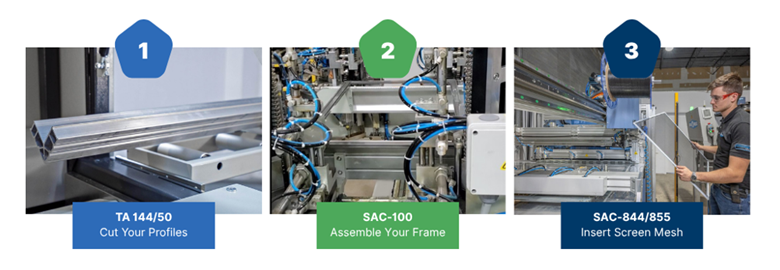
The 3 Steps of the AUTOSCREEN™ Process:

TA 144/50 Automatic Aluminum Wedge Cutting Saw

Automatically measures and cuts screen frame profiles to exact specifications using proprietary optimization software and a generic CSV-mapped format.

SAC-100 Automated Screen Frame Assembly Machine

Assembles all four screen frame components simultaneously with speed and accuracy, ensuring a perfect fit every time.

SAC-850/855 Automated Screen Assembly System

Inserts screen mesh and splines automatically, delivering a tight, consistent finish so your customers enjoy the breeze without the buzz.

The AUTOSCREEN Advantage can produce up to 1,000 screens per shift using just three machines. That means:

  • Fewer operators
  • Faster turnaround
  • A clear path to ROI in record time

Want to dive deeper into the ROI with automation? Check out our latest article:


Product Features

DMC-054

Ready to upgrade your production floor with a solution that delivers speed, precision, and efficiency? The DMC-054 PVC Profile Machining Center is built to streamline operations and boost output, replacing two machines with one powerful, automated system.

Engineered for simultaneous double profiling, double tooling, and dual sawblades, the DMC-054 helps you cut downtime and double your productivity.

 Key Features of the DMC-054:

  • Dual-profile loading: Process more profiles in less time.
  • Automated precision drilling and routing: Consistent, accurate cuts every time.
  • Reduced operator intervention: Let automation handle the heavy lifting.
  • High-speed performance: Keep your line moving without compromise.

Curious to learn more about the DMC-054? See it in action online today!


AL-220/80

Why juggle five separate operations when one machine can do it all?

The AL-220/80 Profile Processing Machine is your all-in-one solution for cutting, milling, drilling, and marking, streamlining your workflow and minimizing non-value-add labor expenses.

Key Features of the AL-220/80 Profile Processing Machine

  • All-in-one functionality: Performs cutting, milling, drilling, and marking operations, eliminating the need for multiple machines.
  • CNC, 9-axis servo precision: Delivers fast, repetitive, and highly accurate profile processing for consistent results.
  • Labor optimization: Reduces non-value-add labor expenses by consolidating five operations into one streamlined system.
  • Automatic angle cutting: Cut at any angle between 45° and 135° in 0.1° increments; no manual adjustments needed.

Join Us at GlassBuild America 2025!

November 4–6 | Orlando, FL | Booth #21097

Ready to see what’s next in fenestration automation? Join Haffner at GlassBuild America for a hands-on look at the innovations transforming production lines across the industry.

At Booth #21097, you’ll get:

  • A guided walkthrough of our latest machinery, including the full AUTOSCREEN™ lineup
  • Insights into how automation can reduce labor strain and boost throughput
  • One-on-one time with our experts to explore solutions tailored to your goals

Use code ORL25 for complimentary entry passes.

Let’s talk about how we can help you build smarter, faster, and more efficiently.

View

If you’re in the PVC window and door manufacturing industry, your brand and profitability are built on precision, speed, and efficiency. That’s where the DMC-054 PVC Profile Machining Center for Frames from Haffner Machinery comes in.

This cutting-edge system is designed to perform all cutting, milling, drilling, and operations on two profiles simultaneously, with just one operator.

Powered by our proprietary Intelligent Parallel Fabrication technology, the DMC-054 combines high-speed servo motor control with a robust industrial PC interface, making it ideal for high-volume production environments. This system not only integrates seamlessly into your current workflow but also reduces labor costs and improves throughput.

We recently talked to Stephen Kucer, President of Haffner Machinery North America, to learn more about the benefits of DMC-054. Keep reading to see how DMC-054 is a game-changer for your PVC production line.

FAQ with Stephen Kucer

How can manufacturers overcome skilled workforce shortages?

Automated systems like the DMC-054 dramatically increase productivity and throughput with only a small incremental investment over traditional systems. Manufacturers can expect a substantial boost in output without expanding labor or floor space.

What makes the DMC-054 unique?

The DMC-054 features double tracks and double tooling, a breakthrough that allows two profiles to be processed simultaneously. This means double the capacity and double the output compared to conventional PVC profile processing centers.

What kind of throughput should I expect from the DMC-054?

The machine averages 2.6 pieces per minute, or one piece every 22 seconds, resulting in 160 pieces per hour. Over an 8-hour shift, that’s over 1,000 unique parts all processed by a single operator with ease.

This performance is exceptional for PVC window frame applications. It sets a new benchmark for cycle time and efficiency.

Who is the DMC-054 designed for?

The machine is laser-focused on PVC window manufacturers, especially those producing in high volumes. It’s ideal for both corporate entities with multiple plants and small-to-medium manufacturers led by hands-on entrepreneurs.

What kind of labor savings can be expected?

The DMC-054 replaces the work of up to four manual operators with a single automated system. This not only reduces labor costs but also minimizes repetitive stress injuries and operator fatigue.


Looking to automate your window screen assembly line? Take a look at our line of automated machinery, AUTOSCREEN™, to see how!


Can I integrate the DMC-054 with my ERP?

The DMC-054 runs on proprietary software that executes macros written by Haffner. These macros interface with the customer’s ERP system to optimize production runs and automate workflow.

What does implementation look like?

Haffner offers a complete turnkey solution—installation, setup, training, and warranty. It’s as simple as buying a car: you get the whole package, ready to run.

Why is automation critical now?

Window manufacturers don’t have a choice. In today’s competitive landscape, automation is essential to stay ahead. Europe is already years ahead in adopting such technologies due to higher labor costs. North American manufacturers must catch up or risk falling behind.

Reading about DMC-054’s capabilities is one thing. Seeing them in motion is another.

Watch the video below to experience how this machine transforms PVC window manufacturing with unmatched speed, precision, and automation.

Ready to upgrade your workflow? Contact Haffner Machinery to learn more or schedule a demo.

View

This month, we explored how smart machinery and proactive strategies are reshaping the production floor, from precision cutting to preventive maintenance. If you’re looking to streamline your screen assembly line or future-proof your operations, Haffner’s latest innovations deliver speed, consistency, and control just for that.

Solving the Production Puzzle with AUTOSCREEN™

Every production floor presents its own unique challenges. Haffner Machinery’s AUTOSCREEN solutions are designed to help manufacturers solve those challenges with precision and efficiency.

Key Components of the System:

Together, these machines form a complete solution that helps manufacturers tackle daily production challenges with confidence and control.

Reactive vs. Proactive: Why Preventive Maintenance Pays Off

A breakdown doesn’t knock. It crashes loudly, messily, and expensively. And when it does, it halts production, delays orders, and chips away at your reputation.

Every hour invested in Preventive Maintenance saves you days of downtime—and money.

A single worn-out component can bring your entire line to a standstill or even cause irreversible damage. That’s why Haffner Preventive Maintenance Services is a competitive strategy.

What You Gain with Haffner Preventive Maintenance:

  • Early detection of hidden issues through structured inspections
  • High uptime via system diagnostics, cycle checks, and precision tuning
  • Extended machine lifespan with proper alignment and wear inspections
  • Critical part replacement based on machine hours—not post-failure
  • Improved safety with E-stop, guard, and interlock reviews
  • Actionable insights from detailed reports and expert advice

Reactive maintenance might feel cheaper in the moment, but it’s a high-stakes gamble. Preventive maintenance helps you win the battle before it begins.


Ready to Transform Your Production Line?

Whether you’re solving the daily puzzle of screen assembly, leveling up with precision machining, or protecting your uptime with preventive maintenance, Haffner Machinery is here to help you move faster, smarter, and more confidently.

Let’s connect and build your next move.
Call 1.888.423.3671 or connect with us today.


Product Features

TA-144/50: Start Strong with Precision Cutting

Every productive day starts with a great cup of coffee: warm, reliable, and energizing. Now imagine your production line starting the same way.

Meet the TA-144/50 Automatic Aluminum Wedge Cutting Saw, the first step in Haffner’s powerful AUTOSCREEN trio. It’s the machine that brings that “first-cup” energy to your fabrication floor.

Why It Sets the Tone:

  • Precision-ground carbide blades deliver clean, accurate wedge cuts—no warm-up needed.
  • Fully automatic operation means your team can hit the ground running with minimal setup.
  • Adjustable cutting angles offer flexibility without slowing you down.
  • High-volume capacity keeps your workflow energized from open to close.

As the foundation of the AUTOSCREEN system, the TA-144/50 ensures your screen frame production starts with speed, consistency, and control.

DMC-052: Precision That Plays to Win

If your production floor feels like a game of Tetris: stacking parts, scrambling to deliver, and hoping everything lines up before time runs out. Haffner Machinery has your cheat code.

Introducing the DMC-052 PVC Profile Machining Center code:

One machine + One operator + One shift = 80 Patio Door Sets

Key Features:

  • Handles all operations: cutting, milling, drilling, dimpling
  • Processes with precision and repeatability
  • Eliminates bottlenecks and micro-delays
  • Maximizes labor efficiency and ROI

No more shuffling parts or rotating components to “make them fit.” The DMC-052 brings control and clarity to your workflow, helping you level up your output without the stress.

SAC-850: Precision Engineered for Screen Automation

The latest upgrade to the AUTOSCREEN trio, the SAC-850, is more than a machine. It’s a precision instrument designed to automate mesh and spline insertion with near-clinical accuracy. Think of it as your assistant for screen production: fast, flawless, and tireless.

Why It’s Revolutionary:

  • Automates mesh and spline insertion with unmatched precision
  • Eliminates manual bottlenecks, freeing your team for higher-value tasks
  • Accelerates production without compromising quality

This isn’t just automation; it’s engineering with intent.

In today’s competitive landscape, efficiency isn’t optional; it’s essential. The SAC-850 gives you the edge by combining speed, accuracy, and reliability in one sleek system. It’s not just a tool — it’s your new production partner.

Meet Us at GlassBuild America 2025 – Booth #21097

We’re excited to invite you to join us at GlassBuild America, happening November 4–6 in Orlando, FL.

Stop by Booth #21097 for a personalized tour of the latest innovations shaping the fenestration industry. From automation breakthroughs to precision engineering, we’ll show you how Haffner Machinery is helping manufacturers level up their production lines.

Use code ORL25 for complimentary entry passes.

Let’s connect, explore what’s new, and talk about how we can support your goals.

View